
How to take body progress photos for abs, fat loss and muscle
The scale moves with water and the mirror changes with the light, so body progress photos are the most honest record of a cut, a bulk or a six-pack on the way, as long as every photo is taken the same way. Here is how.
Updated 28 November 2026 · 5 min read
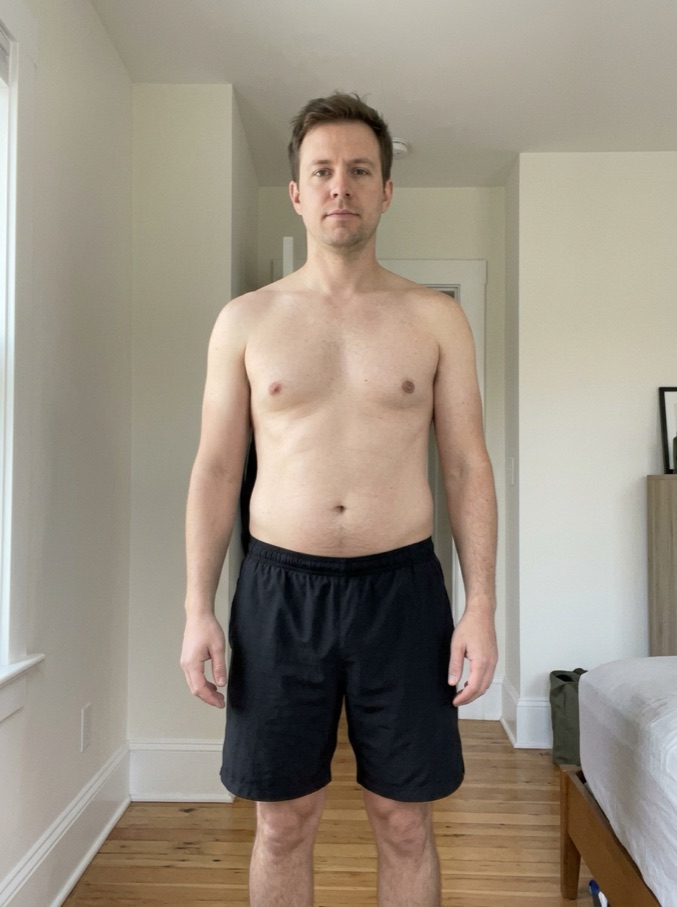
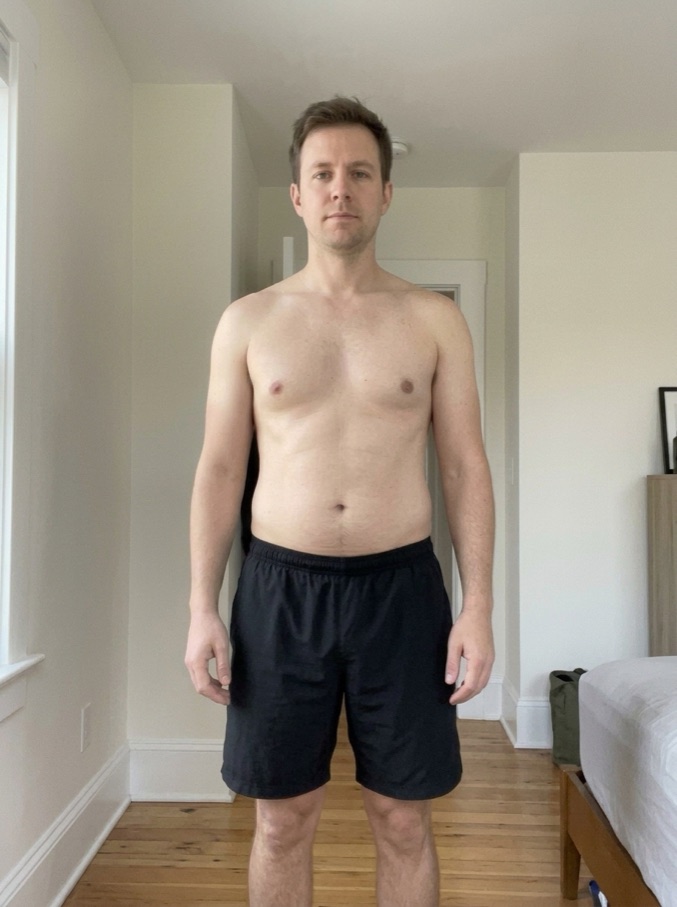
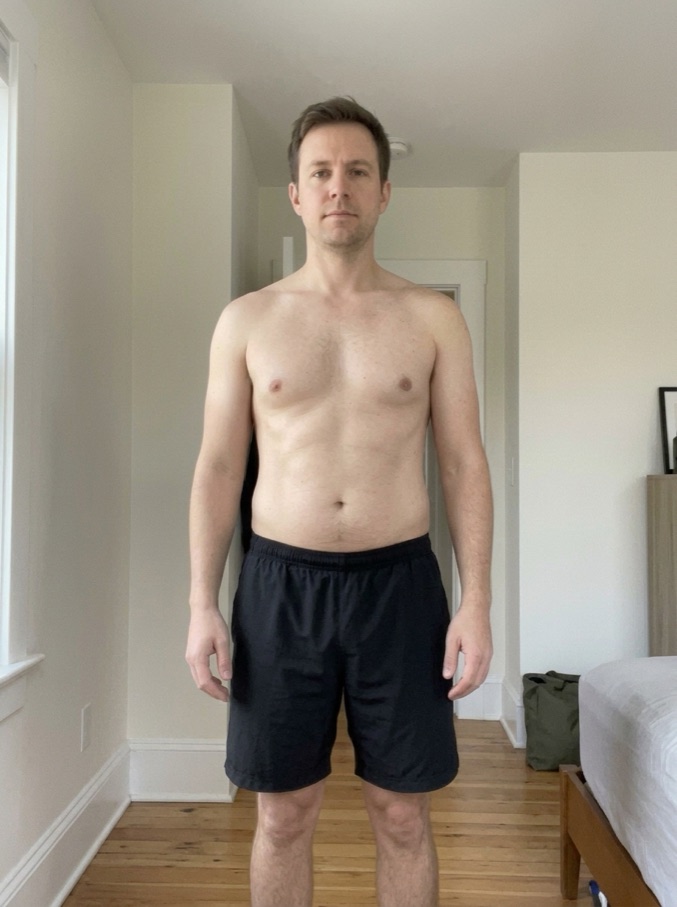
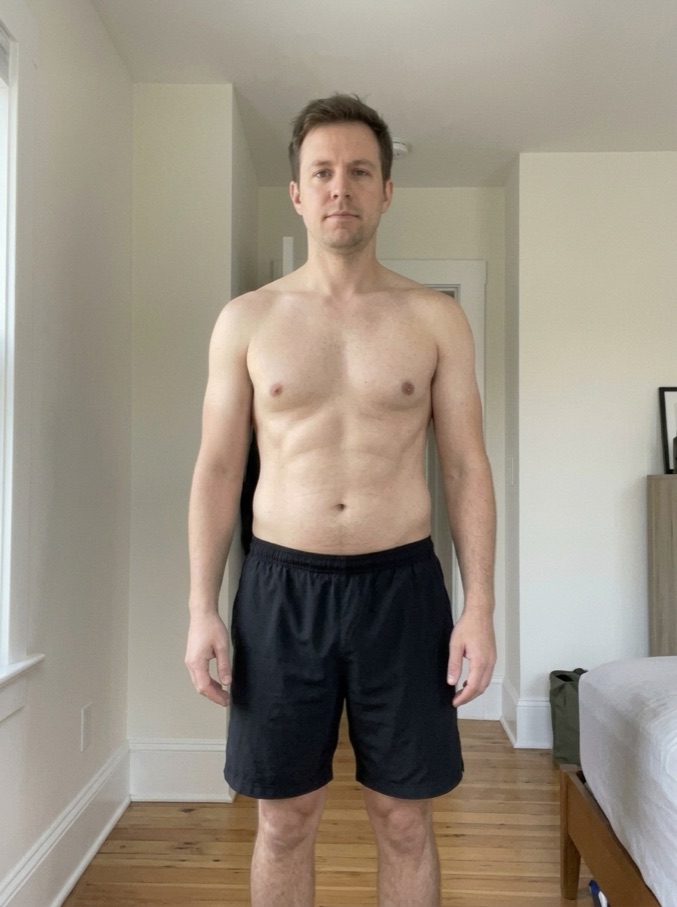
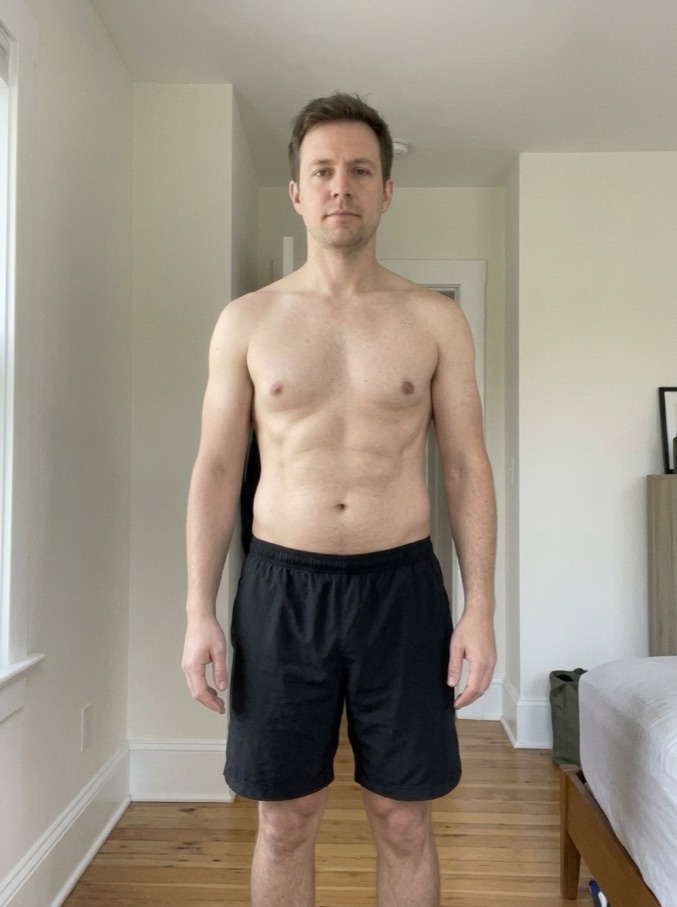
An example, not a customer.
Why photos beat the scale
Body weight can swing by a kilo or more in a day with water, salt and food, and fat loss and muscle gain can cancel each other out on the scale. A photo shows what the number hides: the waist narrowing, the shoulders filling out, the lines on the stomach getting sharper. And because the stomach is often one of the last places fat comes off, abs show up in photos long after they feel like they never will.
The three views
- Front: arms relaxed at your sides, feet hip-width apart, looking straight ahead.
- Side: turn 90 degrees, arms relaxed, so the stomach and posture show.
- Back: the back and shoulders, which change more than you think and you never see in a mirror.
Take them relaxed. If you also want a flexed set, take it as well, but always compare relaxed with relaxed.
Conditions that make photos comparable
- Morning, before eating or training. A pump or a big meal changes the picture.
- The same light, from in front or above-front. Light from straight overhead carves fake shadows on the stomach.
- The same spot, the phone at the same height, around chest or waist height, far enough that your whole body fits.
- The same clothes: shorts or swimwear, so your waist and stomach show.
- The same stance and breath: stand naturally and breathe out normally, don't suck in.
How often
Every two weeks is a good rhythm for fat loss and muscle: often enough to see change, rarely enough that a bloated day doesn't throw you. Weekly photos tend to record water; monthly is fine for slow goals like posture.
How to compare
Put week 0 next to today, not this week next to last week. Look at the waist line, the gap between arms and torso, the shoulders, and the lower stomach. If you share a before and after, put the date under each photo, and use photos taken in the same light: a better-lit after is the oldest trick there is.
Glow Up keeps the same three views every time, only keeps sharp frames, reminds you every two weeks at the time you pick, and lines any two dates up by your shoulders and hips, so you see the change, not where the phone stood.
Questions
What should I wear for body progress photos?
The same thing every time, ideally shorts or swimwear so your waist and stomach show.
Should progress photos be flexed or relaxed?
Relaxed is the honest comparison. Take a flexed set too if you like, but compare relaxed with relaxed.
How often should I take body progress photos?
Every two weeks for fat loss and muscle. Weekly photos mostly show water and food.
What time of day is best for progress photos?
Morning, before eating or training, in the same light every time.
How long does it take to see abs in photos?
It depends on where you start and differs for everyone; for many people it is months. Photos every two weeks show the small changes the mirror misses.
This guide is general information about taking and comparing photos, not medical advice. Glow Up records what your camera sees; it does not diagnose anything.