
Beard growth stages: what happens week by week
Growing a beard goes through stages almost everyone recognises: stubble, the itch, the patchy month, and the point where it suddenly looks like a beard. Here is what each stage looks like and how long it tends to take.
Updated 28 November 2026 · 5 min read
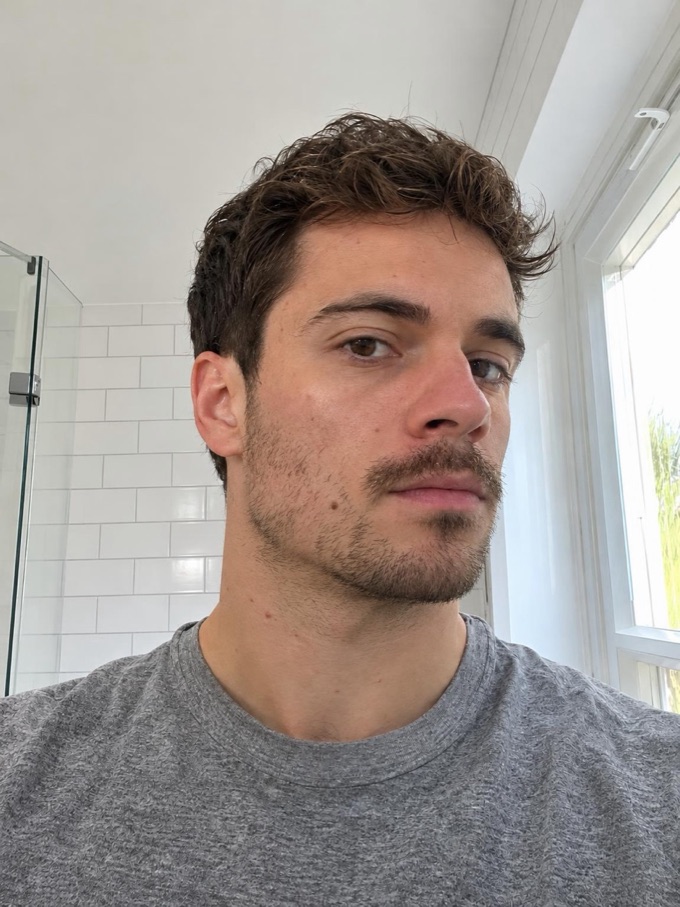
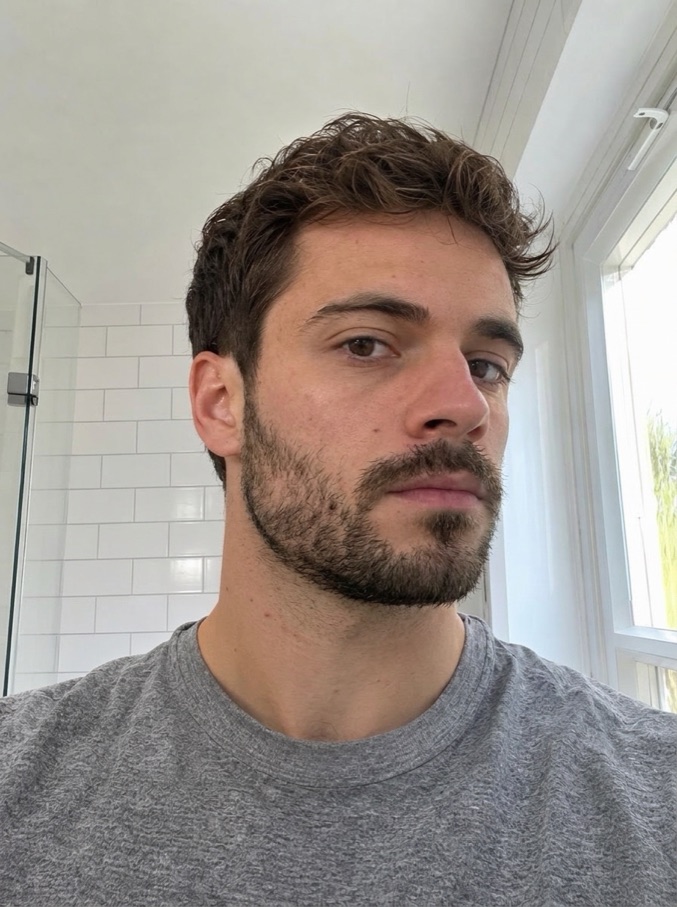
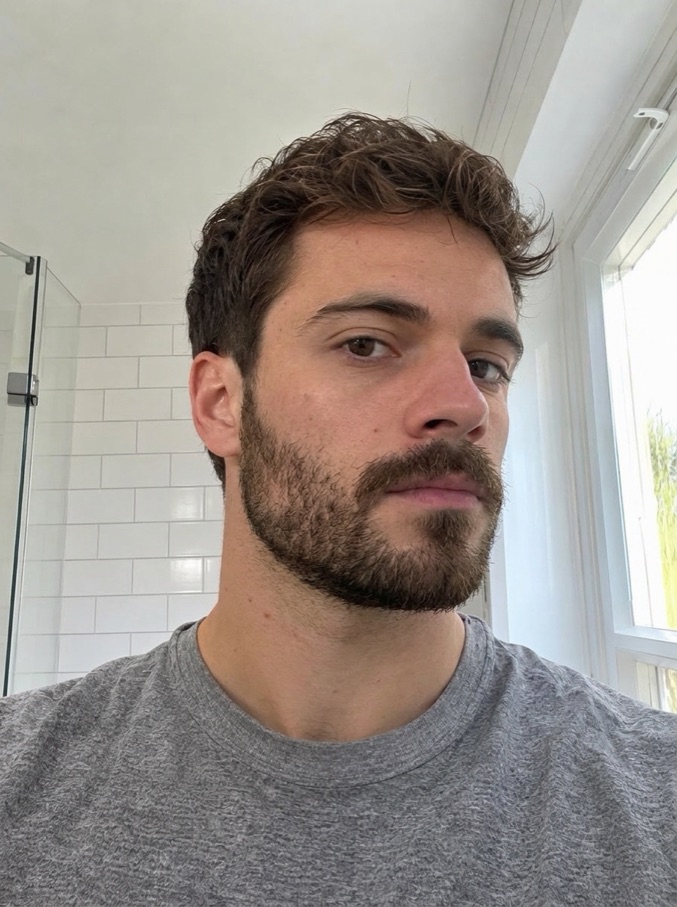
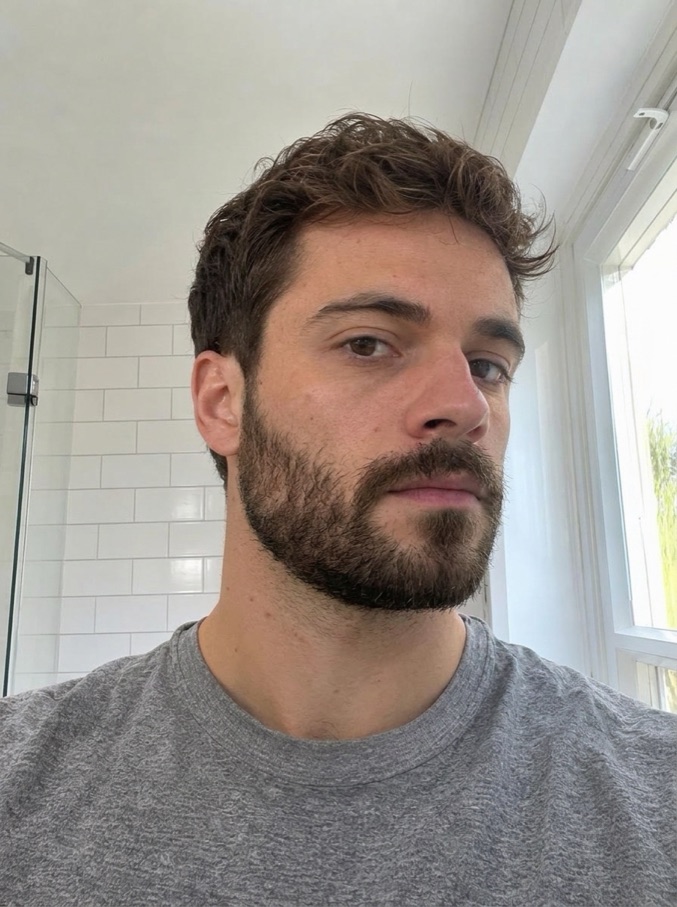
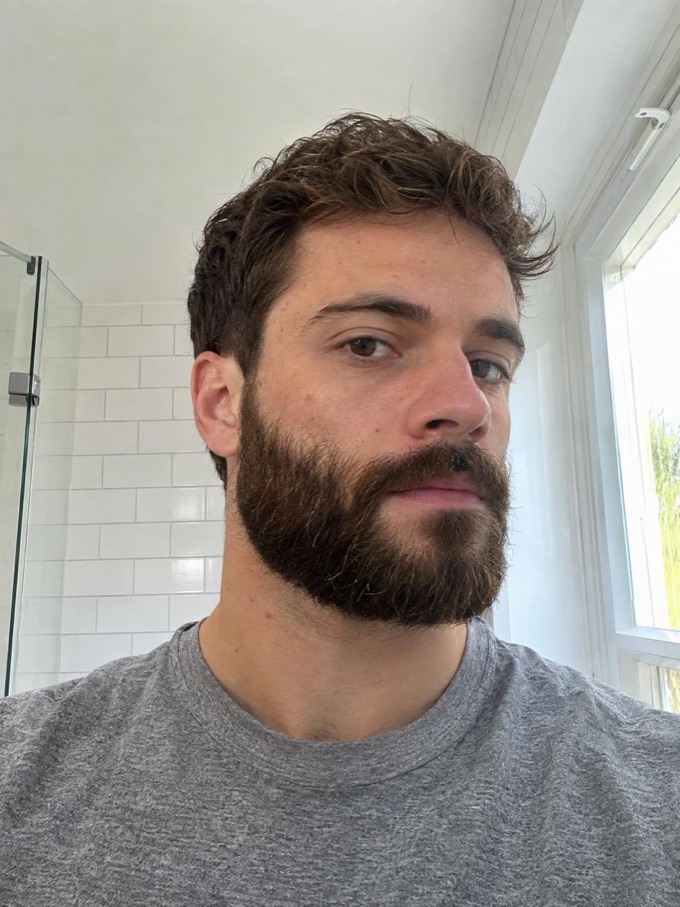
An example, not a customer.
The stages at a glance
- Week 1: stubble. Even, short, and the beard everybody can grow.
- Weeks 2 to 4: the itch, and the first patches. Hairs grow at different speeds, so the cheeks look uneven.
- Weeks 4 to 8: the patchy month. The hardest stage to sit through, and when most beards get shaved off.
- Months 2 to 3: longer hairs start to cover the gaps. The beard gets a shape.
- Month 3 and after: a full beard, if your genes allow one, and time to shape it.
Facial hair is commonly said to grow roughly half an inch, about a centimetre, a month, but the speed and the density are mostly down to genetics and age. Two people with the same routine get different beards.
Weeks 2 to 4: the itch
As the hairs get longer, their sharp cut ends curl back against the skin and the skin under them gets drier, which is why the second and third week itch. Washing the beard and keeping the skin moisturised usually helps. It passes.
Weeks 4 to 8: the patchy stage
Patches are normal at this point. Hair on the cheeks often grows slower and sparser than on the chin and the moustache, and the gaps look biggest when the rest is a few millimetres long. As the hair grows, longer hairs lie over the gaps and cover a lot of them.
This is where weekly photos earn their keep. Week 5 next to week 6 looks the same; week 1 next to week 7 doesn't.
Months 2 to 3 and beyond
By now you can see what your beard will be: where it is full, where it stays thin, how the jaw line joins up. Some patches fill in for months; some stay. Trimming the edges and the neck line, without cutting the length, makes a growing beard look deliberate.
Minoxidil and a patchy beard
Some people use minoxidil on the beard to fill patches. It is an off-label use, so talk to a doctor first. If you try it, judge it the way you would on the scalp: month by month, with photos taken the same way, because the change is slow.
How to photograph a growing beard
- Take a photo on the day you shave, as week 0 or week 1.
- Once a week after that: the front and both sides.
- The same spot, daylight from in front of you, the same expression.
- Compare week 1 with today every few weeks.
Glow Up keeps the front, the left and the right as you turn your head once, says when the light is unlike last time, and lines any two dates up by your eyes, nose and mouth. On minoxidil or after a beard transplant it counts the months instead.
Questions
How long does it take to grow a full beard?
Often 2 to 4 months, depending on your genes and age. Some patches keep filling in for longer.
Why is my beard patchy?
Hairs grow at different speeds and densities, and the cheeks are usually slowest. At 4 to 8 weeks the gaps look biggest; longer hair often covers many of them.
When does beard itch stop?
Usually after the first few weeks, once the hairs are long enough to lie flat. Washing and moisturising the skin under the beard helps.
How fast does a beard grow?
Roughly half an inch, about a centimetre, a month is the common figure, but it varies from person to person.
How often should I take beard progress photos?
Once a week while you grow it out, and once a month on minoxidil or after a transplant.
This guide is general information about taking and comparing photos, not medical advice. Glow Up records what your camera sees; it does not diagnose anything.