
Hair transplant timeline: what to expect month by month
The year after a hair transplant has a shape most people don't expect: the new hair falls out first, the hairline looks thin for months, and then it grows in. Here is that timeline, month by month, and how to see it in your own photos.
Updated 28 November 2026 · 6 min read
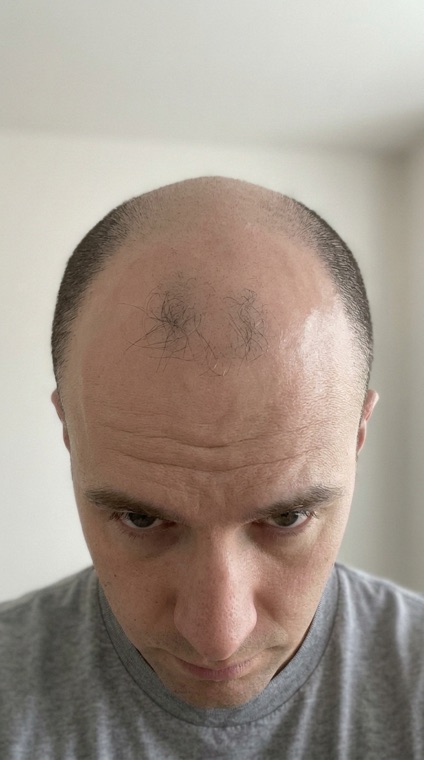
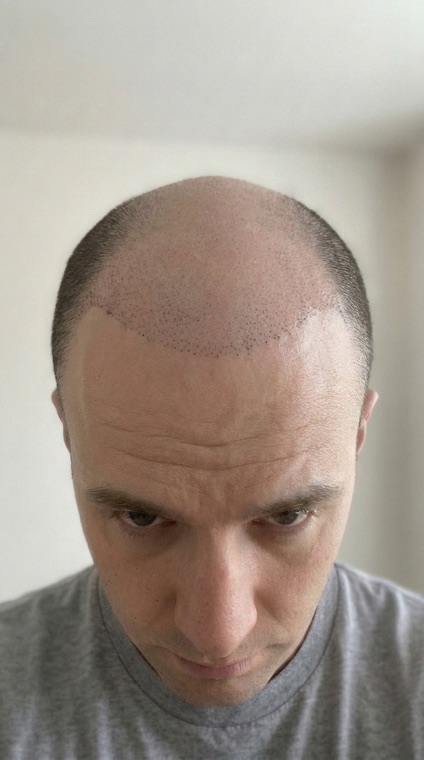
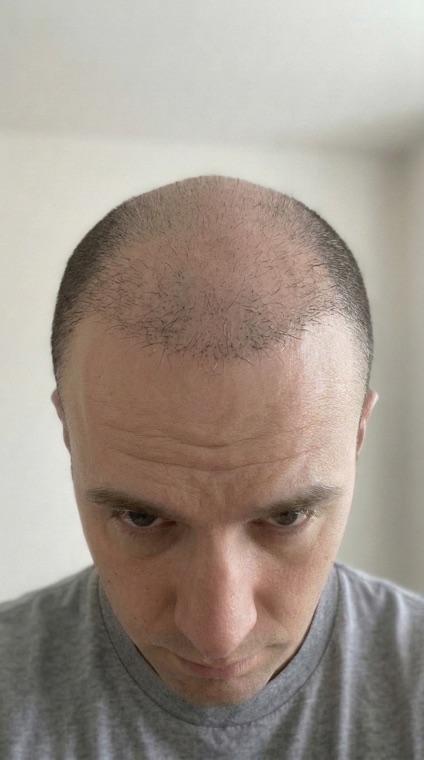
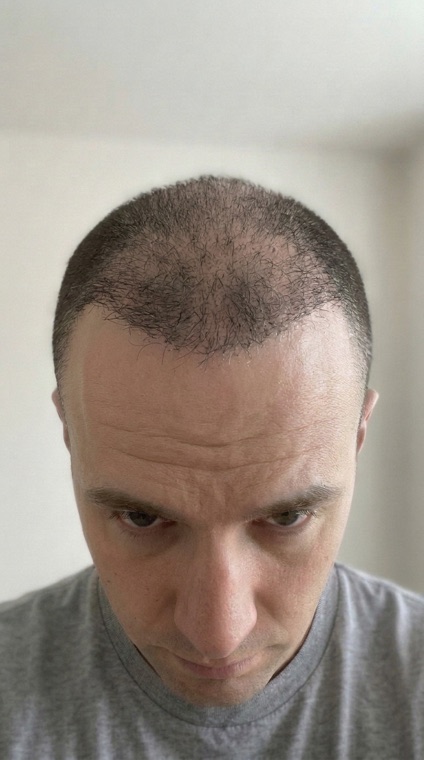
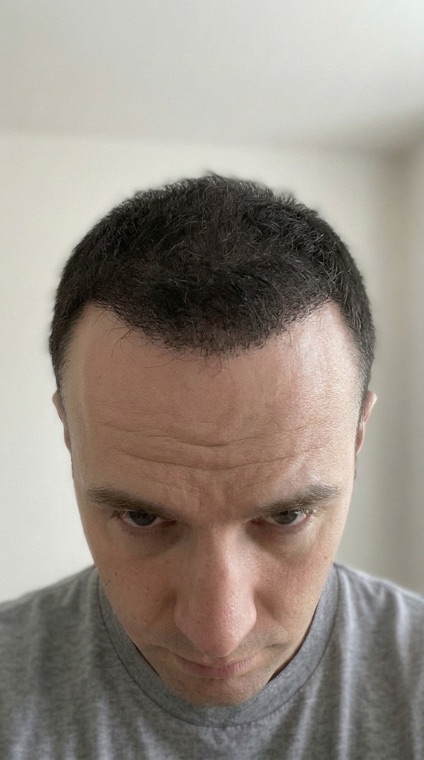
An example, not a customer.
The short version
- Days 1 to 14: redness, swelling and small scabs on the grafts, which fall off in the second week.
- Weeks 2 to 8: most transplanted hairs shed. The roots stay in the skin.
- Months 1 to 3: the quiet phase. The hairline can look as it did before surgery, sometimes thinner.
- Months 3 to 5: new hairs start to break through, fine and uneven at first.
- Months 6 to 8: for many people this is when density clearly shows.
- Months 9 to 12: the hair thickens and settles. The full result takes about a year, the crown often longer.
Everyone heals at their own pace, and the technique, the number of grafts and the area treated all change the timing. Your surgeon's plan comes first; this is the common pattern, not a promise.
The first two weeks: scabs and redness
Right after surgery the recipient area is red and dotted with tiny crusts where each graft went in. Swelling on the forehead is common in the first days. Follow your clinic's aftercare for washing and sleeping exactly; this is the stage where grafts are still settling.
By the end of the second week most scabs have come off. The short hairs you see now are the transplanted hairs, and it is tempting to think the result is already there. It isn't yet.
Weeks 2 to 8: the shedding
Most transplanted hairs fall out in this window. It looks alarming and is expected: the hair shaft sheds, while the follicle under the skin stays and rests before it grows a new hair. Some people also lose a little of their own hair around the area for a while, often called shock loss, which usually grows back too.
This is the first moment a photo helps. Next to the day-14 photo, month 2 looks like a step backwards; next to the photo from before the surgery it usually doesn't, and that is the comparison that matters.
Months 1 to 3: the ugly duckling phase
For a few months there is little to see. The new hairline can be faintly visible as a line of dots, the old thin hair is still thin, and the mirror says nothing has happened. Many people start doubting the surgery here.
There is nothing to do but wait and keep the record going. One set of photos a month, taken the same way, is enough; daily checking only makes the wait longer.
Months 3 to 5: first regrowth
New hairs start to come through, usually fine, short and sometimes a little wiry, and not all at once. The hairline fills in patches before it fills in evenly. Some people get small pimples where hairs break through; mention them to your clinic.
In photos, this is where month 0 and month 4 start to look different, especially at the hairline. It is still far from the result.
Months 6 to 8: density shows
For many people the change becomes obvious here: more hairs, thicker hairs, and a hairline that reads as a hairline. Styling starts to matter again. The crown tends to lag behind the front.
Months 9 to 12 and after: the result
The hair keeps thickening and the texture settles. The full result of a transplant takes about a year, and the crown can take longer. This is the point to set the photo from before surgery next to today and judge the result.
How to photograph a hair transplant
- Take a set before surgery. It is the photo every later one is compared with, and it is the one most people forget.
- Once a month after that, on roughly the same date.
- The same views every time: the hairline with your chin down, the left and right temple, and the crown from above.
- The same spot and the same light, ideally daylight from in front of you. Overhead bathroom light makes any hairline look thinner.
- Dry hair, styled the same way, or pushed back so the hairline shows.
- Compare month 0 with today, not month 3 with month 4.
Glow Up does most of this for you. It takes the hairline, both temples and the crown one step at a time, like setting up Face ID, warns you before it shoots when the light is darker, brighter or from the other side than last time, and lines hairline and temple photos up by your face, so you compare hair, not camera angles.
Questions
When does a hair transplant start growing?
New hair usually starts to show around months 3 to 5, after the transplanted hairs have shed. Density often becomes clear around months 6 to 8, and the full result takes about a year.
Is it normal for transplanted hair to fall out?
Yes, shedding in the first weeks is common and expected. The follicles stay under the skin and grow new hairs over the following months. Ask your surgeon if something looks different from what they told you.
What does a hair transplant look like at 3 months?
Often not much better than before surgery, and sometimes thinner. This is the ugly duckling phase; first regrowth usually follows over the next months.
How often should I take hair transplant progress photos?
Before surgery, then once a month with the same views and the same light. Monthly is enough to see the change without worrying about every day.
How long until I see the final hair transplant result?
About a year for most people, and the crown can take longer. Judge the result by comparing your photo from before surgery with one taken at month 12.
This guide is general information about taking and comparing photos, not medical advice. Glow Up records what your camera sees; it does not diagnose anything.